Which engine oil fits your car: 5W-30, ACEA and approvals explained
A bottle of engine oil shows a viscosity, an oil class and often car maker approvals. Here is how to read those codes and find the oil your owner's manual asks for.
Popular picks from this guide
Popular products at today's lowest price. Compare every shop on the product page.
Short answer: The engine oil your car needs is in the owner's manual: a viscosity such as 5W-30, an ACEA or API class and often a car maker approval such as VW 504 00 or MB 229.51. Look for an oil that carries everything the manual names; the viscosity alone is not enough.
The explanations below come from oil maker Castrol, the European car makers' association ACEA and the American Petroleum Institute (API); the approvals per oil are read from the product names. Sorppa tests nothing itself. When in doubt, your car's manual or your garage has the final word.
What does 5W-30 mean?
The number on the bottle is the viscosity: how thick or thin the oil is. Castrol explains it like this: the W stands for winter, the number before it tells you how well the oil flows at a cold start, and the number after it how thick the oil is at 100 °C, the temperature of a warm engine.
- The first number (0W, 5W, 10W): the lower it is, the more easily the oil flows through a cold engine. A 0W oil is thinner at a cold start than a 10W oil.
- The second number (20, 30, 40): the higher it is, the thicker the oil at operating temperature.
Thin oils with a low HTHS viscosity, such as ACEA class C5, are meant according to ACEA only for engines designed for them and approved by the car maker. Don't pick a different viscosity from the one in the manual yourself. The catalogue includes Liqui Moly Top Tec 6200 0W-20, Castrol Edge 5W-30 C3 and Liqui Moly Leichtlauf 10W-40.
From 0W-20 to 10W-40
- Liqui Moly
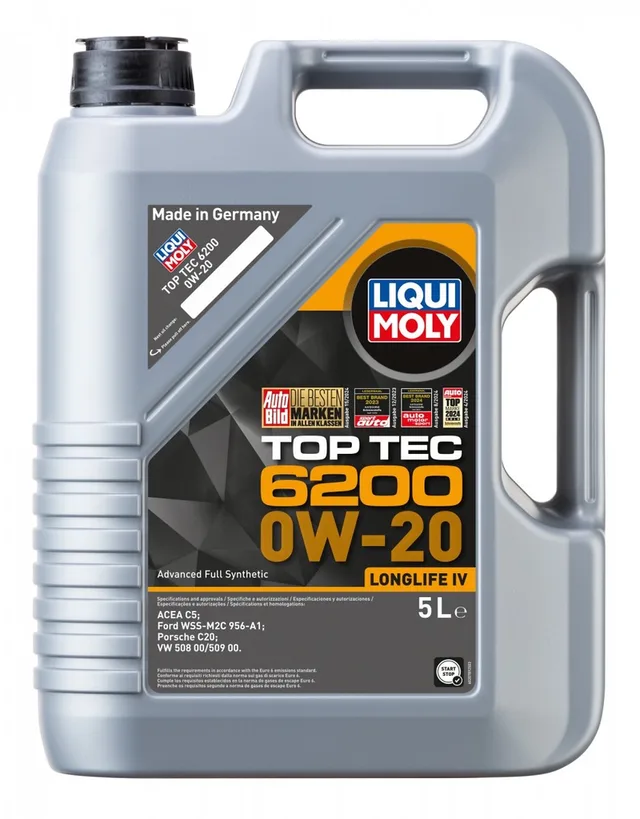
0W20 Top Tec 6200 Motorolie ( 5L ) 20789 LongLife IV C5 WSSM2C956A1 C20 508 00/509 00
From €81.45 · at 3 shops
Lowest in 90 days
- Liqui Moly
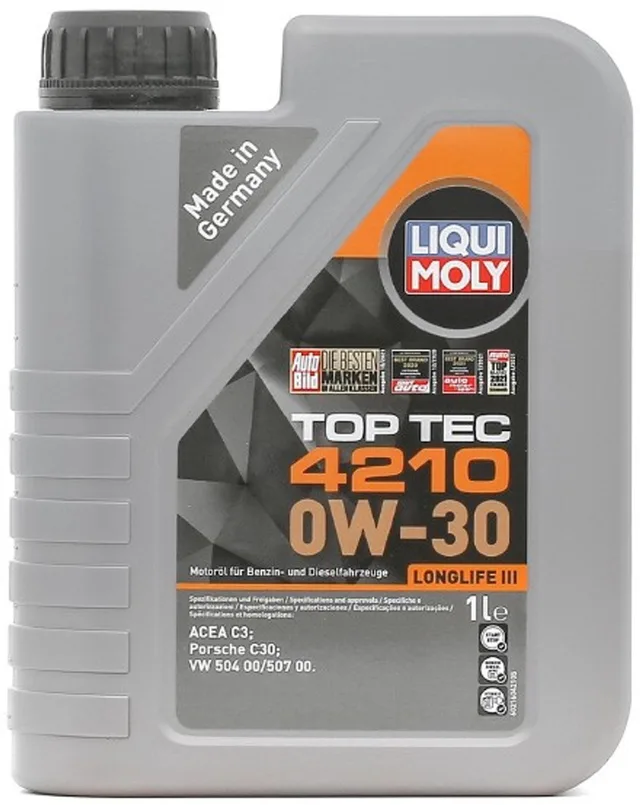
1L Liqui Moly 21604 Top Tec 4210 0W-30 Motorolie ACEA C3, BMW Longlife-04, MB-Freigabe 229.51/229.52, Porsche C30, VW 504 00/507 00
(21604)From €32.99 · at 3 shops
- Castrol
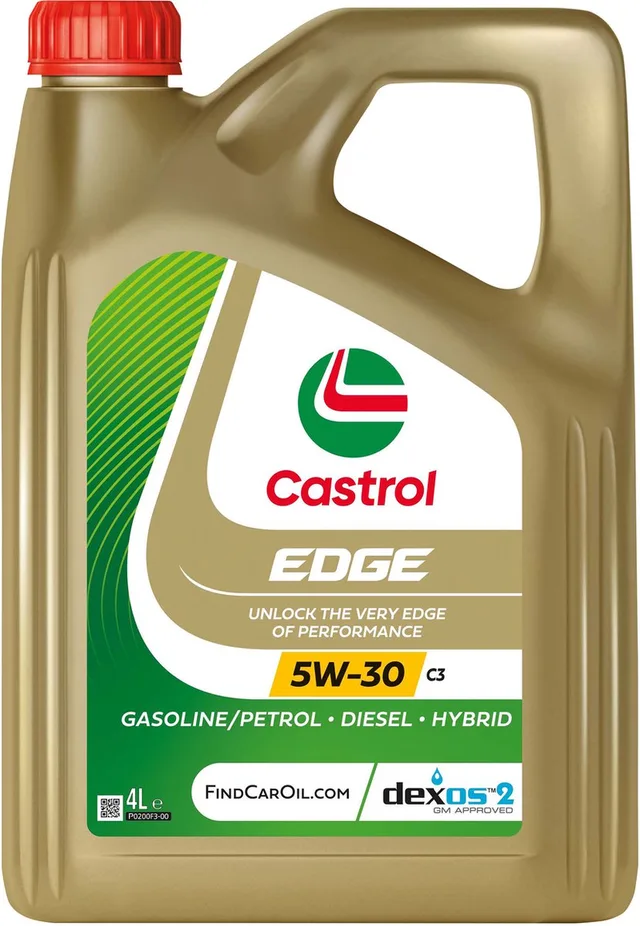
Edge
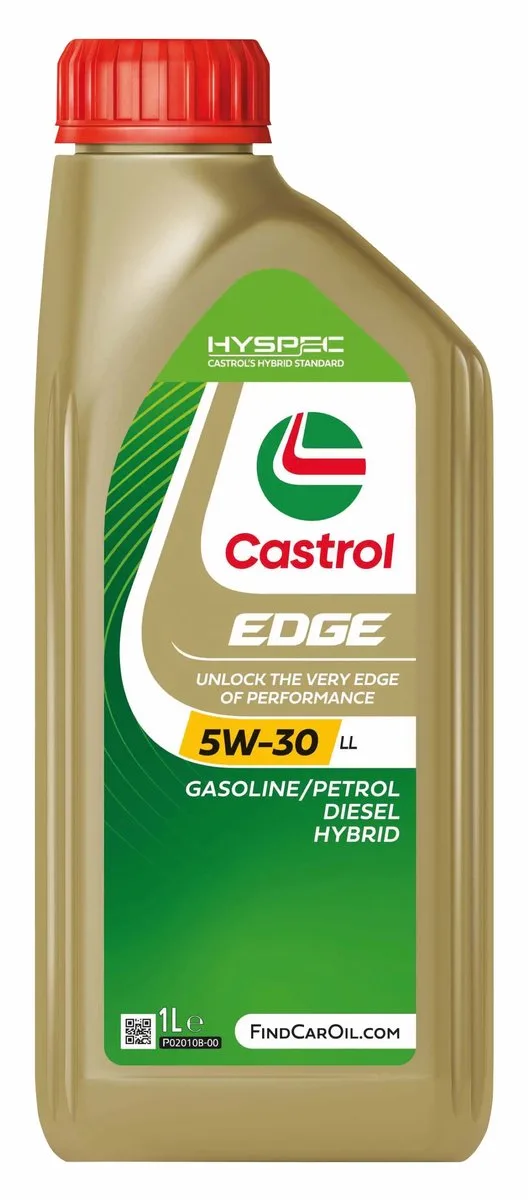
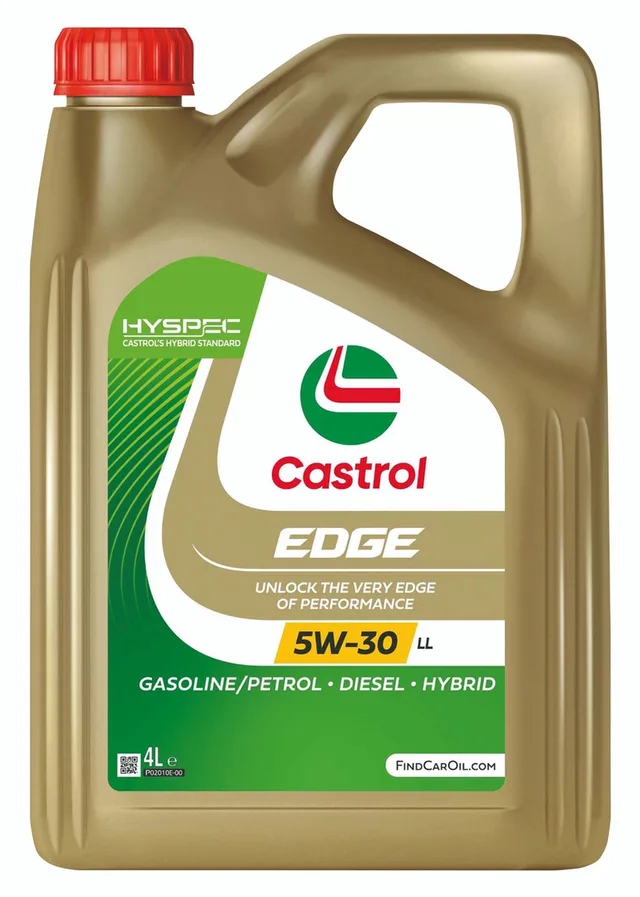
Motorolie · 5W-30 C3 · 4 LiterFrom €63.73 · at 2 shops
Lowest in 90 days
- Castrol
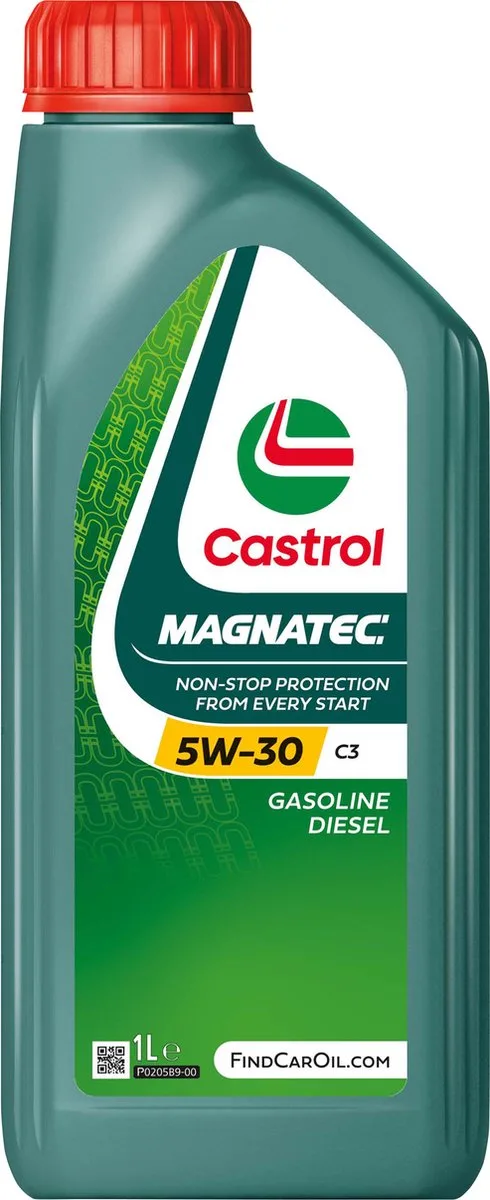
Magnatec 5W-30 C3
1LFrom €20.81 · at 2 shops
- Castrol
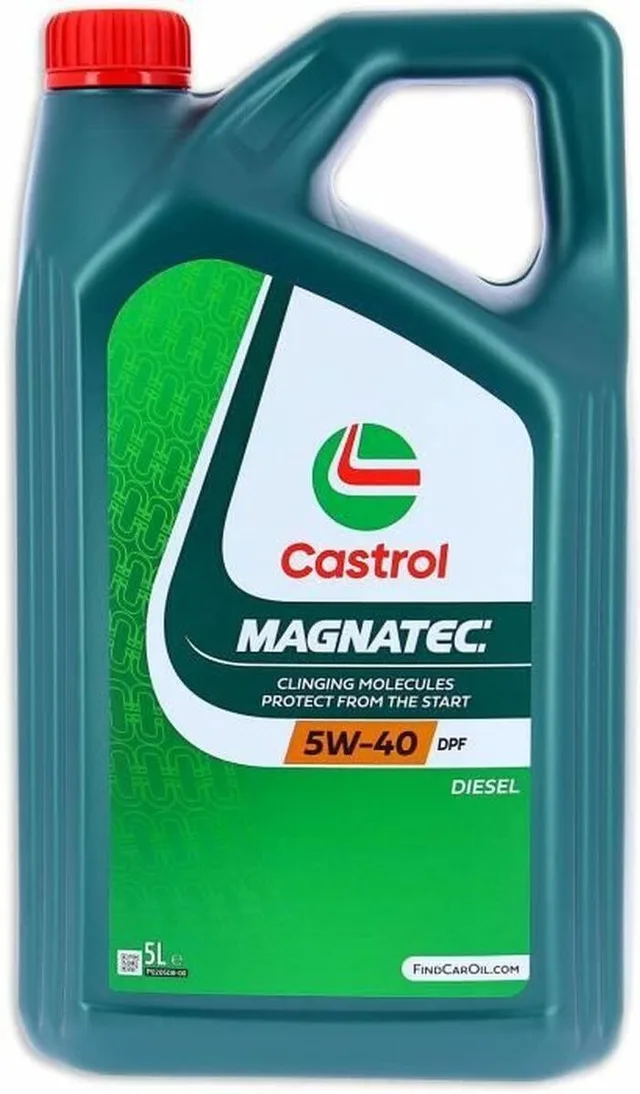
Magnatec 5W-40 DPF, 5L
From €50.99 · at 3 shops
- Liqui Moly
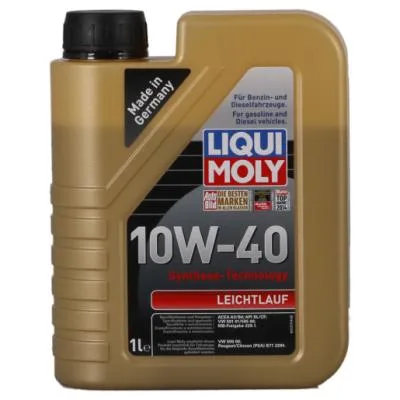
LEICHTLAUF 10W-40 LEICHTLAUF 10W-40
€20.98 · at 1 shop
ACEA: A/B and C
ACEA is the European association of car makers. It writes the European oil sequences: a letter and a number, followed by the year of the version (for example C3-23).
- A/B oils are for petrol and diesel engines, with more ash-forming additives (high SAPS, as ACEA puts it).
- C oils are, according to ACEA, compatible with catalytic converters and particulate filters (DPF and GPF), because they contain fewer ash-forming additives (low or mid SAPS). Which class your car needs is in its manual.
Within the C classes, the main difference is the minimum HTHS viscosity, the thickness at high temperature and high load. ACEA sets a minimum of 2.9 mPa·s for C2, 3.5 mPa·s for C3 and 2.6 mPa·s for C5. So C3 and C2 are not simply interchangeable. An oil such as Castrol Magnatec 5W-30 C3 names its class in the product name.
API: SQ, SP and earlier classes
API is the American counterpart. For petrol engines API has had SP since May 2020, and since 31 March 2025 the newer class SQ; oil maker Chevron calls SQ backward compatible with cars that use SP. API says an SP oil gives full protection where the manual calls for SN. API also advises following the owner's manual first. For a European car, also check the ACEA class and the car maker approval in the manual.
Your car maker's approval
Many car makers have their own standards on top of ACEA. You see them as codes on the bottle and in the product name, for example:
- VW 504 00 / 507 00 for Volkswagen;
- MB 229.51 for Mercedes-Benz;
- BMW Longlife-04 for BMW.
One example is Petronas Syntium 5000 AV 5W-30: its name lists ACEA C3, MB 229.51, BMW LL-04 and VW 504.00/507.00. Liqui Moly Top Tec 4210 0W-30 lists ACEA C3, BMW Longlife-04 and MB 229.51/229.52. Mannol Longlife 5W-30 lists 504/507. If the code from your manual is not on the bottle, choose another oil.
Oils with a car maker approval
- Petronas
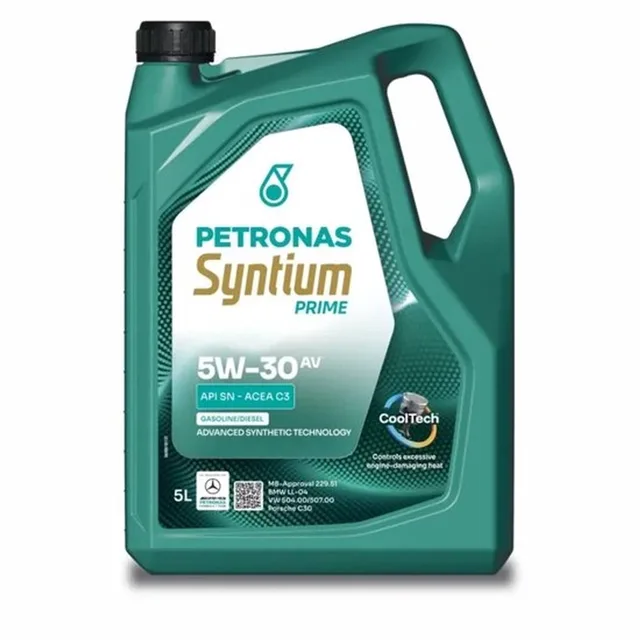
5L Petronas 5W30 Syntium 5000 AV ACEA C3 229.51 BMW LL-04 VW 504.00/507.00 70950M12EU
(70950M12EU)€53.54 · at 1 shop
- Liqui Moly
1L Liqui Moly 21604 Top Tec 4210 0W-30 Motorolie ACEA C3, BMW Longlife-04, MB-Freigabe 229.51/229.52, Porsche C30, VW 504 00/507 00
(21604)From €32.99 · at 3 shops
- Liqui Moly
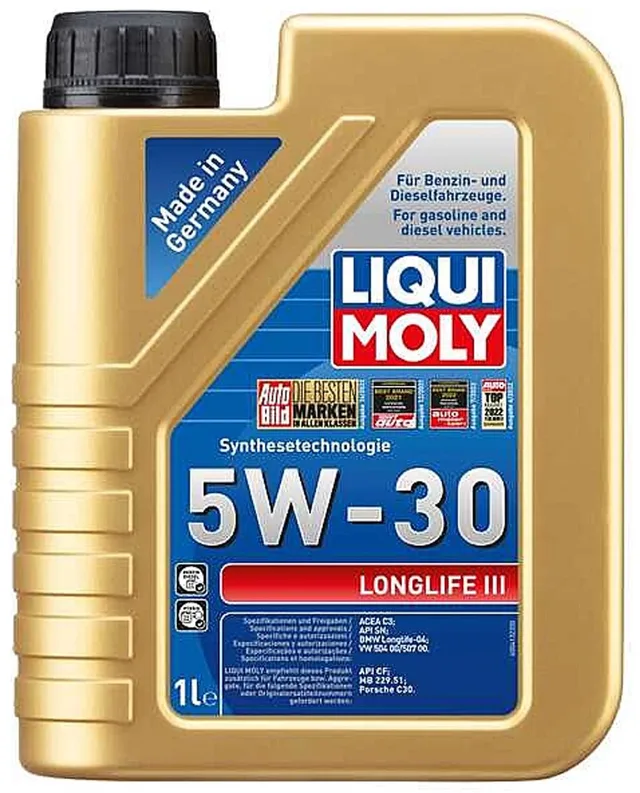
Longlife III 5w30 Motorolie 1 liter
From €20.64 · at 2 shops
Lowest in 90 days
- Liqui Moly
0W20 Top Tec 6200 Motorolie ( 5L ) 20789 LongLife IV C5 WSSM2C956A1 C20 508 00/509 00
From €81.45 · at 3 shops
Lowest in 90 days
How many litres?
How much oil your engine takes is in the owner's manual too, often with and without a new oil filter. For topping up between services, a 1 litre bottle is usually enough, such as Castrol Edge 5W-30 C3 in 1 litre. For a full change, 4 or 5 litre bottles are common, such as Castrol Edge 5W-30 C3 in 4 litres. Packs of 20 litres and more are meant for workshops.
Top up with the same oil that is in the engine, or with one of the same viscosity, class and approval. Check the level with the dipstick on level ground, after the engine has been off for a while.
Compare prices
Under engine oil you find every oil with prices from several shops. Each bottle size has its own EAN and Sorppa compares them one by one, so a 5 litre bottle is never compared with a 4 litre one. Brands such as Castrol, Liqui Moly and TotalEnergies each have their own page.
Frequently asked questions
Can I use 5W-40 if my manual says 5W-30?
Use the viscosity the manual names. Some car makers allow more than one viscosity; if 5W-40 is not on the list, don't use it.
What is the difference between C2 and C3?
Both are ACEA classes for cars with a particulate filter. According to ACEA, C3 has a higher minimum HTHS viscosity (3.5 mPa·s) than C2 (2.9 mPa·s). Use the class the manual names.
Can I mix different brands of engine oil?
Topping up with another brand of the same viscosity, class and approval is common practice. If you can't find one, ask your garage.
Where do I find which oil my car needs?
In the owner's manual or service booklet, in the chapter on maintenance or fluids. It lists the viscosity, class, approval and quantity.
Keep looking
Sorppa doesn’t test devices itself. This guide sets out what manufacturers state.
Products from this guide
Popular products with a current price at the shops. Compare the prices on the product page.
- Castrol
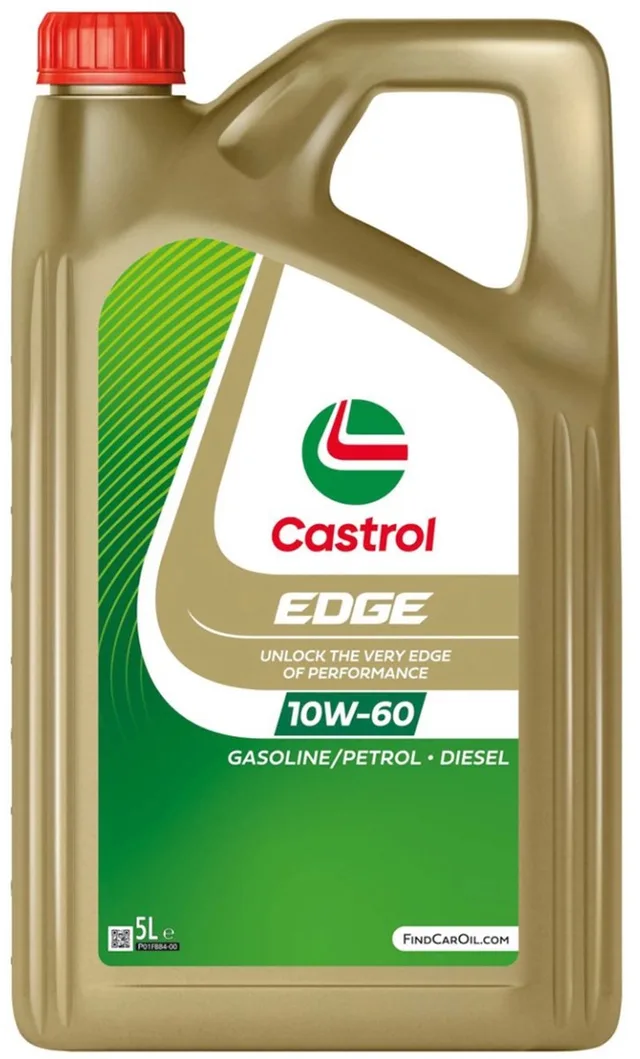
Edge 10W-60, 5L
From €77.99 · at 3 shops
Lowest in 90 days
- Castrol
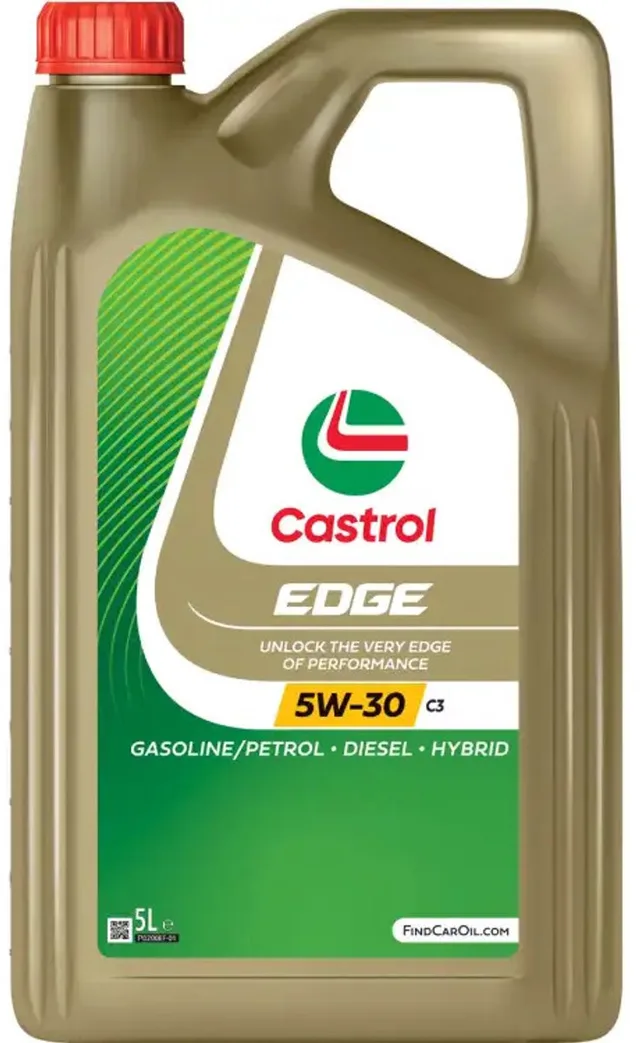
Edge 5w30 C3 olie 5 liter
From €69.85 · at 2 shops
Lowest in 90 days
- Castrol
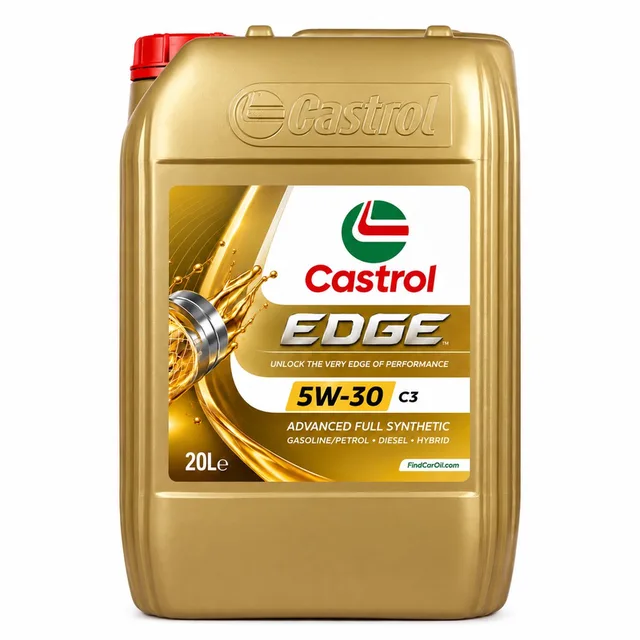
Edge C3 5W30
20LFrom €219.99 · at 2 shops
- Castrol
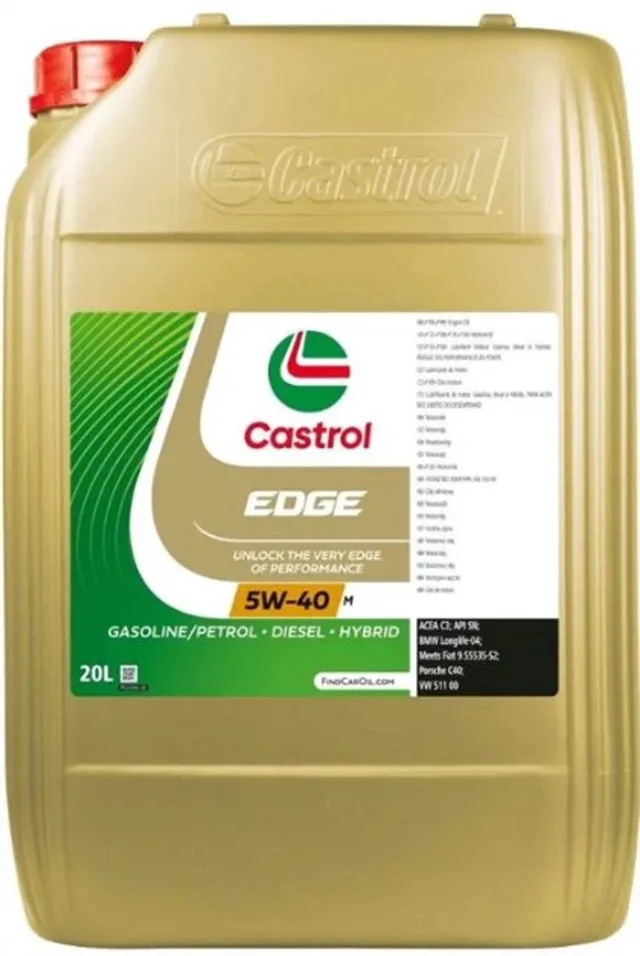
Edge M 5W40, 20L
From €260.16 · at 3 shops
- Castrol
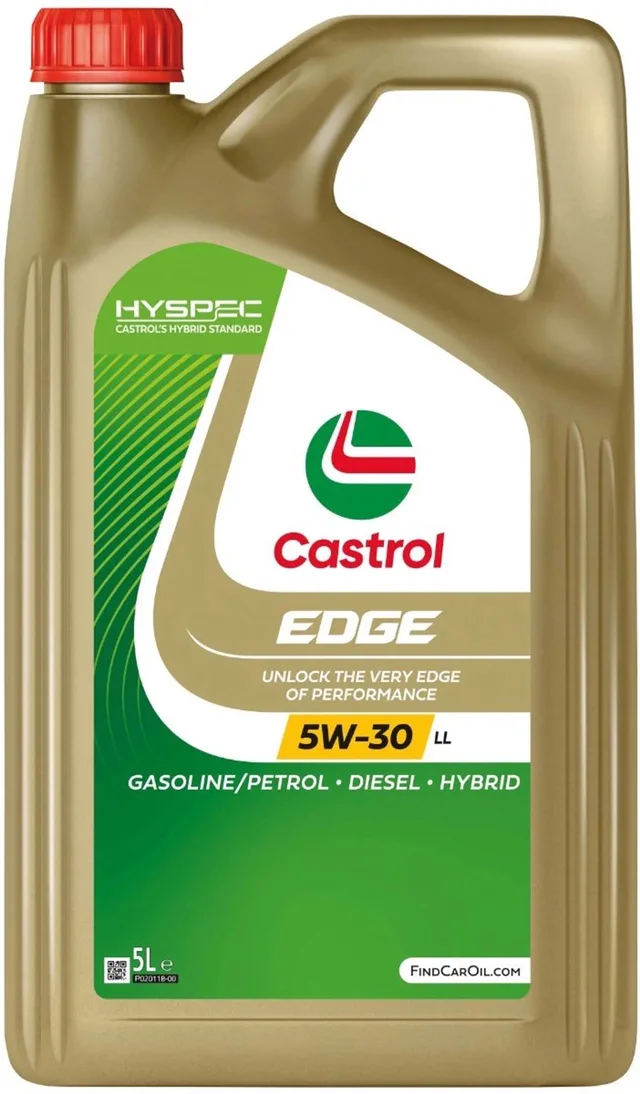
Edge Titanium 5W30 LL
5LFrom €64.98 · at 3 shops
Lowest in 90 days
More buying guides
- Choosing a roof box: size, roof load, mounting and opening You choose a roof box, also called a rooftop cargo box, on space, roof load and roof bars. Here is how to work out what your car may carry and what to watch for in mounting, speed and storage. Read the guide
- Choosing a tow bar bike carrier: e-bikes, nose weight and tilting You choose a tow bar bike carrier by the number of bikes, the weight of carrier and bikes together, and what your tow bar may carry. Here is how to work it out, e-bikes included. Read the guide
- Battery charger or jump starter: which suits your battery? A battery charger recharges your battery, a jump starter only starts the engine. Here is how to choose by voltage, amps and battery type, and keep the battery full while the car stands still. Read the guide